6 Things Saskatchewan Buyers Should Know Before Choosing the 2026 Mazda CX-90 PHEV
June 23 2026,
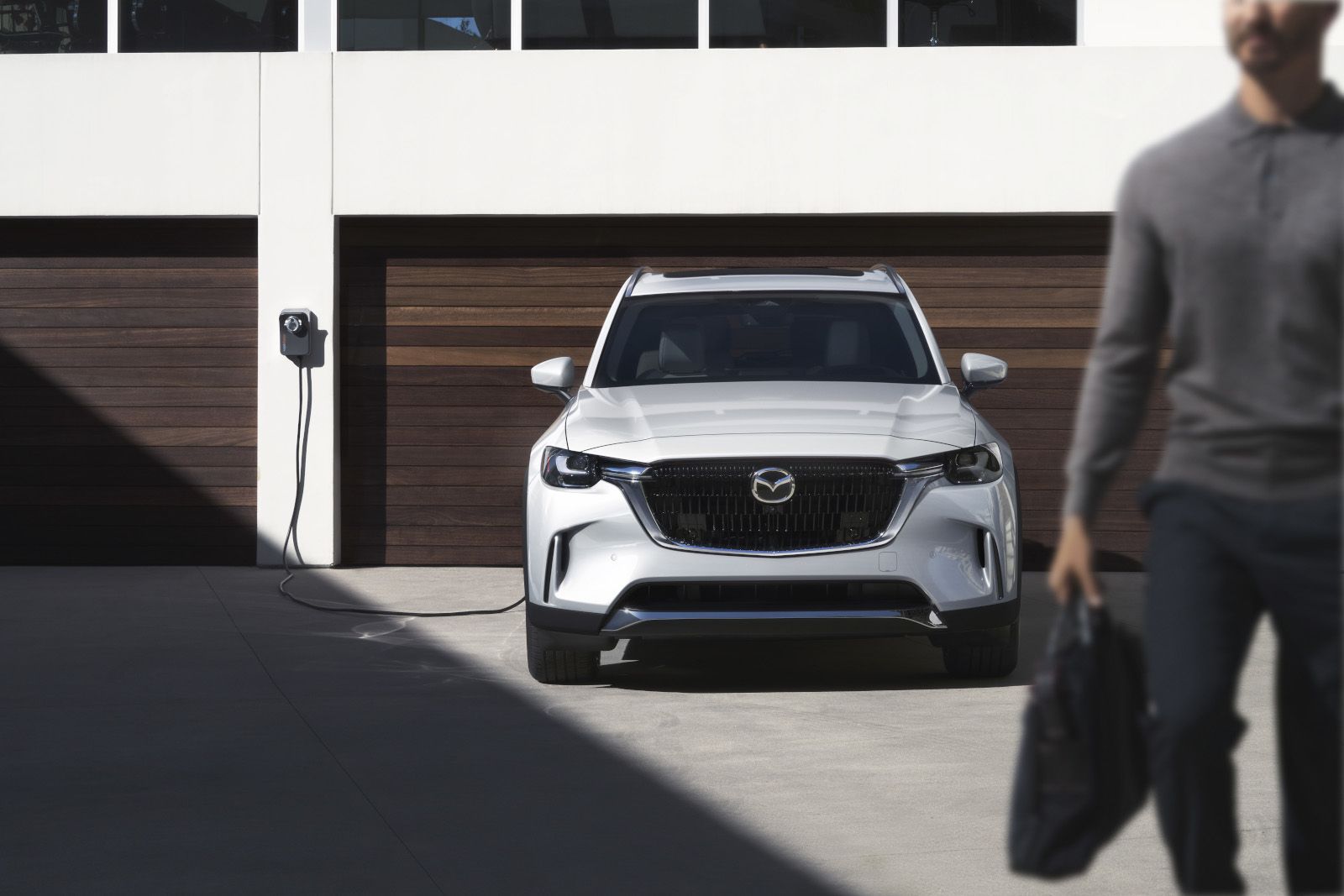
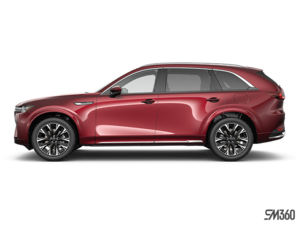
The 2026 Mazda CX-90 PHEV is a three-row plug-in hybrid SUV that pairs a 2.5 L 4-cylinder engine with an electric motor and a 17.8 kWh lithium-ion battery to produce a combined 323 hp and 369 lb-ft of torque. It tows up to 3,500 lbs, seats up to eight passengers, and can travel up to 42 kilometres on pure electric power. On paper, the spec sheet is easy to admire.
For drivers in Saskatchewan, the more useful question is how those numbers translate to life on the Prairies. The PHEV proposition involves trade-offs that look different in Regina than they do in Vancouver — and understanding them before visiting the dealership puts you in a much better position to decide whether the CX-90 PHEV is the right fit for your household, or whether a different option in the CX-90 lineup makes more sense for how you actually drive.
- The 42 km Electric Range Is a Daily Commute Number, Not a Weekend Number
The CX-90 PHEV's estimated electric-only range of 42 km assumes a fully charged battery under standard conditions. For Regina residents whose daily round trip — home, work, school pickup — falls under 42 km, the vehicle can cover a typical weekday largely on electricity with regular overnight charging.
The weekend picture is different. A trip to Last Mountain Lake, a drive to Moose Jaw, or a run to visit family in Saskatoon all fall well beyond that electric range. On those drives, the PHEV operates in hybrid mode — the 2.5 L engine carries the load while the battery assists — with a combined fuel economy rating of 9.2 L/100 km in hybrid mode. That figure is competitive for a vehicle of this size, but Saskatchewan families who spend more time on inter-city highway drives than short urban trips will draw more regularly on the gasoline engine than the electric range numbers suggest.
- Cold Weather Affects Both Range and Charging Time
This is the consideration that matters most for Saskatchewan buyers, and it is documented directly in Mazda's own specifications. At temperatures below freezing, the CX-90 PHEV's engine may start and use fuel even with a fully charged battery — because the gasoline engine is required to heat the passenger cabin. In a province where winter temperatures in Regina regularly fall below -20°C, this is not an edge case. It is a routine condition for five or six months of the year.
Electric range in cold temperatures also decreases — lithium-ion batteries deliver less energy output as temperatures drop. The published charging times (6.4 hours from 20% to 80% on Level 1 at 120V, and 1.3 hours on Level 2 at 240V) are based on a 20°C ambient temperature. In cold conditions, the actual charging time can increase significantly. Saskatchewan PHEV buyers who plan around overnight Level 1 charging should account for this variability during winter months.
- Published EV range: 42 km (under standard conditions)
- Engine engages for cabin heating in cold weather, regardless of battery state
- Level 1 charging: 6.4 hrs (20%–80%) at 20°C — increases in cold conditions
- Level 2 charging: 1.3 hrs (20%–80%) at 20°C — increases in cold conditions
- The Hybrid Mode Is a Genuine Fallback, Not a Penalty
For Saskatchewan drivers who may be skeptical about plug-in hybrids in cold climates, the CX-90 PHEV's hybrid architecture is worth understanding clearly. This is not a vehicle that suffers when the battery runs down — the e-Skyactiv PHEV powertrain is designed to operate in hybrid mode as a standard function, not a fallback of last resort.
With a combined fuel economy rating of 9.2 L/100 km in hybrid mode, the CX-90 PHEV operates comparably to other large three-row SUVs in its class during the stretches of Saskatchewan driving that exceed the electric range. The 70 L fuel tank provides range that covers Regina-to-Saskatoon and back on a single fill. On long Prairie highway segments, the engine handles highway cruise efficiently while the electric motor continues to assist under acceleration and low-speed conditions. Saskatchewan drivers who charge consistently at home will see meaningful fuel savings on city and short-distance driving, while the gasoline engine covers the long hauls without compromise.
- Home Charging Is the Practical Baseline — Not Public Infrastructure
British Columbia and Quebec have dense urban public charging networks. Saskatchewan's public charging infrastructure outside of Regina and Saskatoon is more limited. For Prairie PHEV ownership to work well day to day, home charging is the baseline assumption rather than a bonus.
Level 1 charging uses a standard 120V household outlet and adds range overnight — practical for most households with a dedicated parking spot or garage. Level 2 charging requires a 240V outlet or a dedicated home charging station, brings the battery from 20% to 80% in approximately 1.3 hours at 20°C, and is the option that makes the most practical difference for Saskatchewan owners who want to start each day with a full charge. Buyers who regularly drive beyond 42 km before returning home — which describes a significant portion of Saskatchewan commuters and rural drivers — benefit from having Level 2 available so the battery can recover quickly between uses rather than relying solely on overnight Level 1 charging.
- The Towing Capacity Is a Meaningful Practical Asset
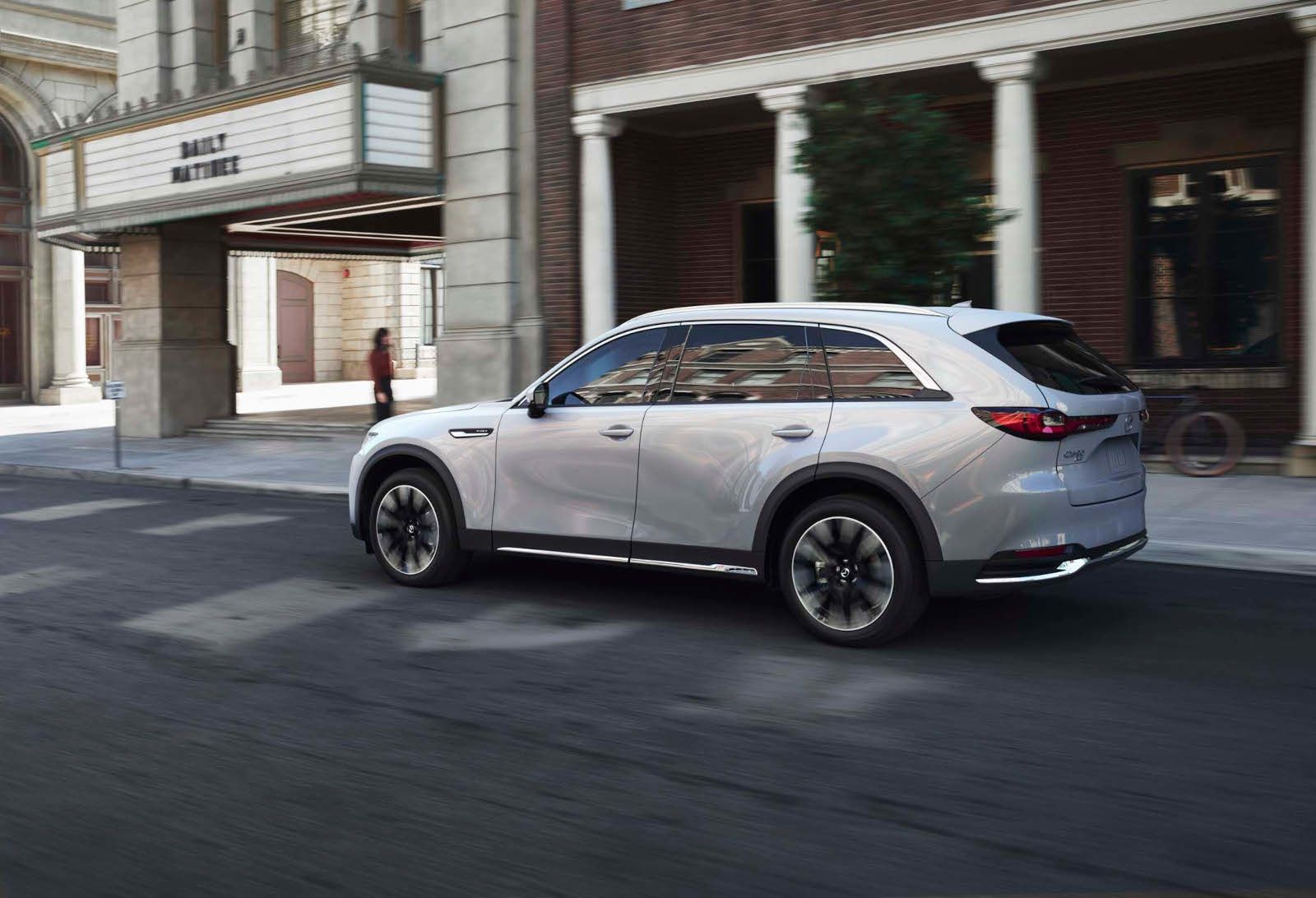
The 2026 CX-90 PHEV tows up to 3,500 lbs when equipped with Mazda Genuine Towing Accessories, and Mi-Drive includes dedicated Off-Road and Towing modes for situational control. In Saskatchewan, where hauling a boat to a lake north of Regina, pulling a snowmobile trailer to the Qu'Appelle Valley, or towing a utility trailer for a rural property is a regular reality rather than an occasional weekend task, that towing capacity gives the CX-90 PHEV a practical advantage over PHEVs that rate below 2,000 lbs.
Towing in hybrid mode draws more heavily on the gasoline engine, as the electric motor's contribution is more limited under sustained towing loads. Saskatchewan families who will tow regularly should understand that their fuel consumption during towing trips will be closer to conventional SUV figures rather than the combined hybrid rating.
- Seating Configurations Vary by Trim
The 2026 CX-90 PHEV seats up to eight passengers, but the specific configuration depends on the trim selected. The GS trim offers eight-passenger seating with second and third-row bench seats. Moving to the GS-L, the second row switches to captain's chairs with a centre walk-through for seven-passenger seating. The GT also accommodates seven passengers with second-row heated captain's chairs and armrests.
For Saskatchewan families who genuinely need eight seats for regular use — extended family gatherings, carpooling for sports teams, multi-child households — the GS bench configuration delivers that capacity. Families who prioritize second-row access and individual seat comfort over maximum headcount will find the GS-L's captain's chairs a better daily fit. It is worth deciding which configuration matters to your household before settling on a trim, since moving up from GS to GS-L changes not just equipment but the seating layout itself.
Key Takeaways
|
Consideration |
What It Means for Saskatchewan Buyers |
|---|---|
|
42 km EV range |
Covers typical Regina daily commutes; long-haul drives run on hybrid mode |
|
Cold-weather battery |
Engine starts for cabin heat in winter regardless of charge level |
|
Charging times |
Based on 20°C — extend significantly in Prairie winter conditions |
|
Hybrid mode fuel economy |
9.2 L/100 km combined — consistent performance when battery is depleted |
|
Towing capacity |
3,500 lbs with Mazda Genuine Towing Accessories; well-suited to Saskatchewan use cases |
|
Seating configuration |
8-passenger (GS bench) or 7-passenger (GS-L/GT captain's chairs) — choose before trim selection |
Learn More at Regina Mazda
The 2026 CX-90 PHEV is a well-sorted vehicle for the right buyer — and the right buyer in Saskatchewan is someone who charges at home regularly, does most of their daily driving in or around Regina, and values the hybrid mode's capability for longer Prairie drives and occasional towing. If you have questions about how the PHEV works across the seasons or which trim configuration fits your household, our team at Regina Mazda is glad to walk through the details with you. Stop in and take a look.