Everything Regina Drivers Need to Know About the 2026 Mazda CX-5's Google Built-In Technology
February 17 2026,
Most drivers in Regina have a smartphone in their pocket that runs on Android or iOS, and they've built habits around how those devices work — Google Maps for navigation, voice queries for quick answers, familiar apps for music and podcasts. Until now, using any of that inside a car meant either mirroring your phone through a cable, connecting wirelessly, or navigating a separate in-car interface that worked differently from everything else in your daily life.
The all-new 2026 Mazda CX-5 changes that approach. It's the first Mazda vehicle to feature Google built-in as standard — meaning the Google ecosystem lives directly inside the vehicle's display, not as a mirror image of your phone, but as a native system running on the screen itself. For Saskatchewan drivers who are curious about what that actually means in daily use, this article explains it in plain terms, without assumptions about what you already know.
What Is Google Built-In?
Google built-in is a technology platform that allows select Google apps and services to run natively on a vehicle's infotainment display — without requiring a phone to be connected, plugged in, or even in the car. The 2026 CX-5 comes with Google Maps, Google Assistant, and access to the Google Play Store built directly into the system.
"Native" is the key word here. When you use Apple CarPlay or Android Auto, you're essentially projecting your phone's screen onto the car's display. The phone is doing all the work; the car is just showing you the image. Google built-in is different: the apps and services run on the vehicle's own hardware. Your phone can stay in your bag, and the system still functions fully.
For a Regina driver heading out on Ring Road or taking the Trans-Canada east toward Moose Jaw, this means your navigation, voice commands, and app access work whether or not your phone is charged, connected, or even present.
The Three Core Features, Explained Simply
Google Maps
Google Maps in the 2026 CX-5 operates exactly as it does on your phone — with live traffic data, updated points of interest, and routing that reflects actual road conditions. The previous Mazda Connect system used a navigation SD card with static map data that required periodic replacement to stay current. Google Maps updates automatically, without any action from the driver.
For drivers in Saskatchewan, this matters on longer routes. A trip from Regina to Saskatoon on Highway 11, or east toward Brandon on the Trans-Canada, involves stretches where road conditions and construction routing can change. Google Maps reflects those changes in real time, rather than directing you based on data that may be months or years old.
Google Assistant
Google Assistant is the voice interface for Google built-in. You can ask it conversational questions, give it navigation commands, control media playback, adjust vehicle settings, and handle phone calls — all without touching the screen. Unlike older voice systems that required specific command phrases, Google Assistant is designed for natural speech. You can ask follow-up questions in the same conversation, change your request mid-sentence, and get responses that go beyond simple on/off commands.
The 2026 CX-5 also supports Gemini, Google's AI assistant, which is coming soon to vehicles with Google built-in. Gemini is designed to handle more complex, multi-part queries and carry context across a conversation — a step forward from current voice assistant capability.
Google Play Store
The Google Play Store gives CX-5 owners access to a curated selection of in-vehicle compatible apps directly from the vehicle's display. This includes apps for music, audio streaming, news, and other services that Mazda and third-party developers make available. As the app ecosystem grows, Mazda can push updates and new features to the vehicle over time — meaning the system can expand in capability after purchase, rather than remaining static.
How the 2026 CX-5 Screen Works
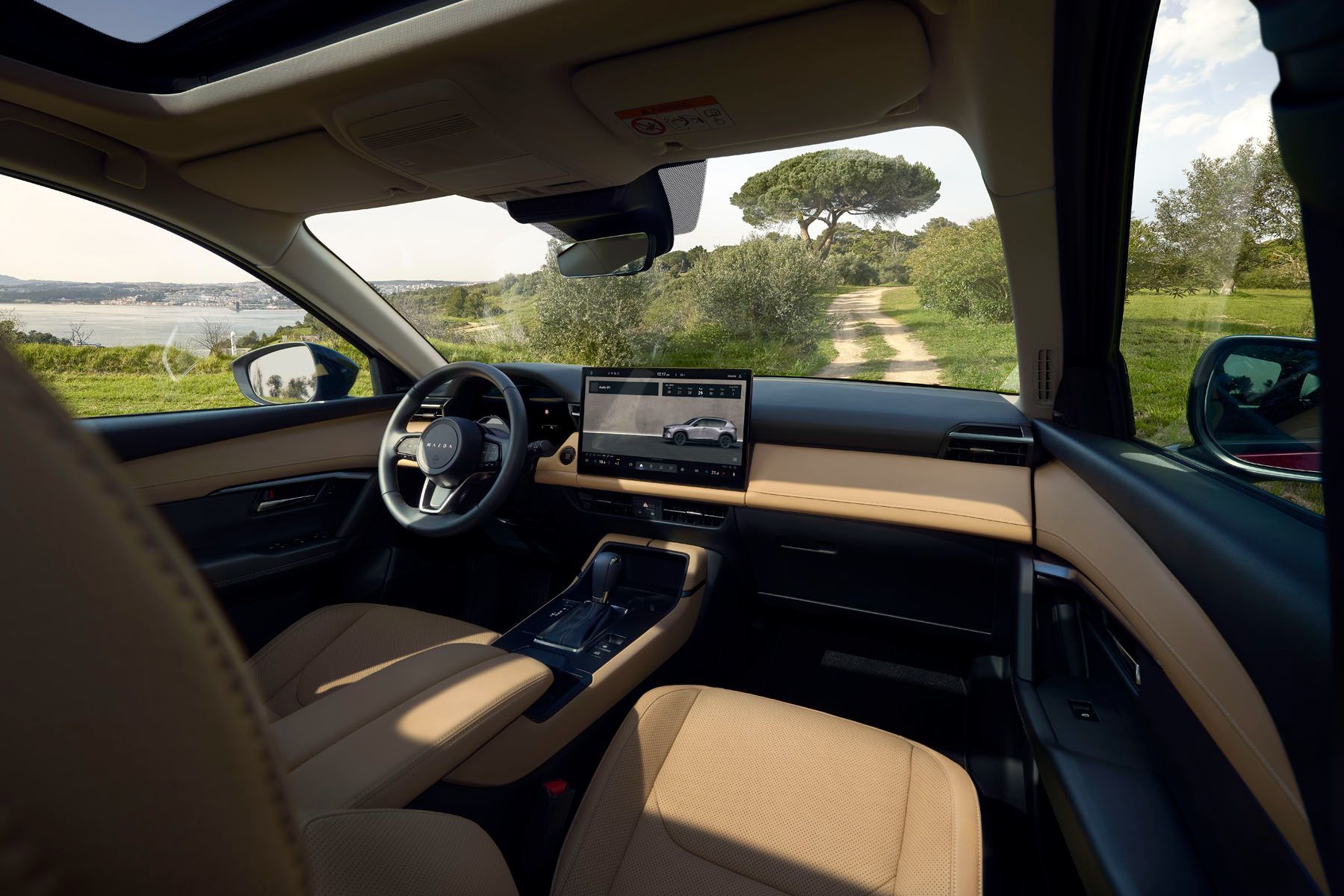
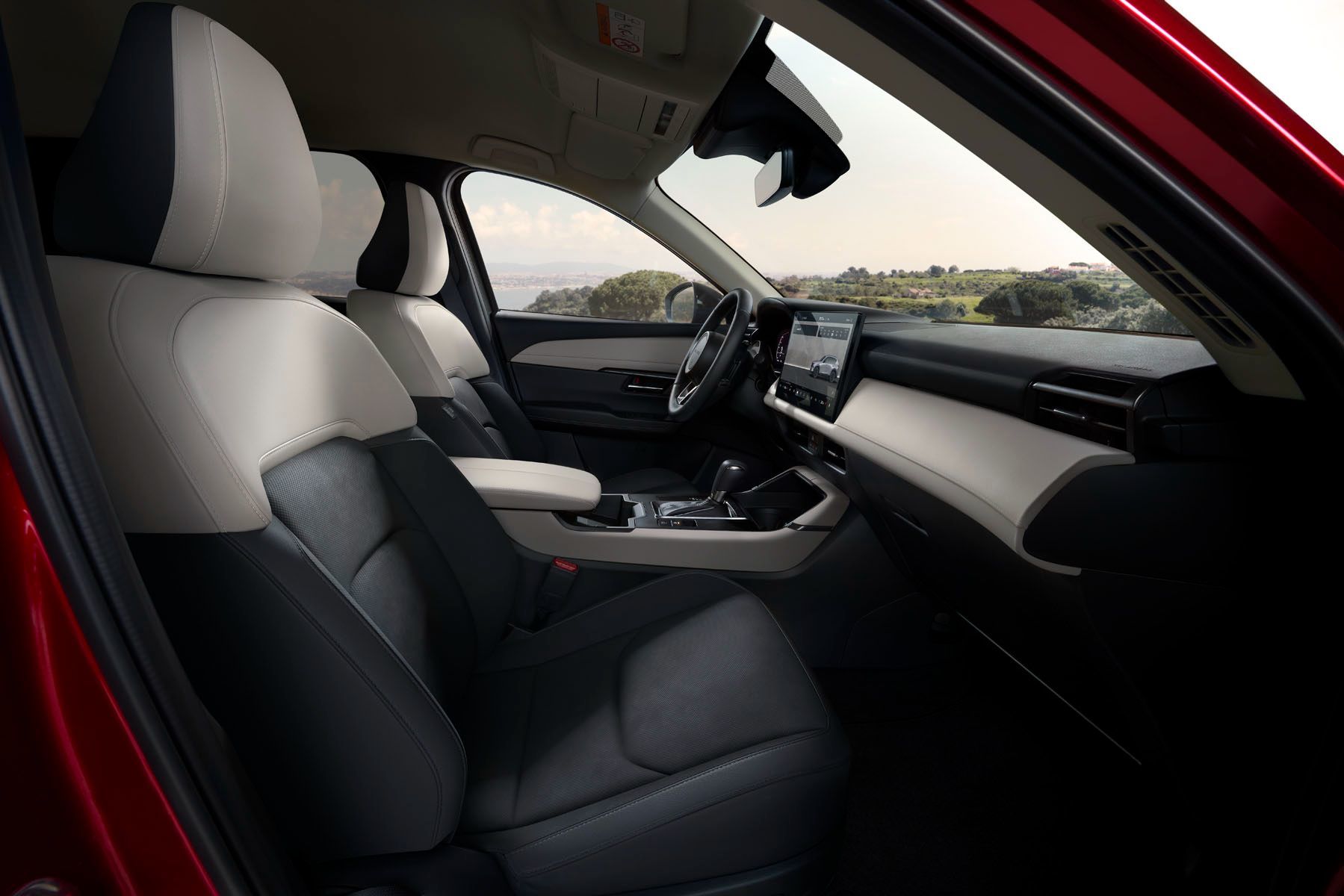
The 2026 CX-5 offers two display sizes: a standard 12.9-inch touchscreen and an available 15.6-inch display — the largest ever fitted to a Mazda vehicle. Both screens run the same Google built-in interface.
The interface is designed around how people use smartphones: a customisable home screen with quick access to frequently used features, commonly used controls like HVAC and volume docked at the bottom of the screen for fast access, and steering wheel controls that let the driver interact with the interface without taking their hands off the wheel. The goal, as described by Mazda's in-vehicle technology team, was to make the system "feel familiar to how customers interact with smartphone-like devices."
Google Built-In vs. Apple CarPlay and Android Auto: What's the Difference?
This is the question most Regina drivers will have, and it's worth being direct about it.
|
Feature |
Google Built-In |
Apple CarPlay / Android Auto |
Previous Mazda Connect |
|---|---|---|---|
|
Phone required? |
No |
Yes |
No |
|
Navigation data |
Live, auto-updated (Google Maps) |
Live via phone |
Static SD card map |
|
Voice assistant |
Google Assistant / Gemini |
Siri / Google Assistant |
Limited Mazda commands |
|
App access |
Google Play Store (in-vehicle) |
Phone apps mirrored |
No third-party apps |
|
Works without phone charge |
Yes |
No |
Yes |
|
Updates over time |
Yes (OTA capable) |
Via phone OS |
Requires SD card replacement |
Apple CarPlay and Android Auto remain available in the 2026 CX-5 as standard options for drivers who prefer to mirror their phone. The key distinction is that Google built-in gives drivers a fully functional, connected experience even when a phone isn't part of the equation. For passengers in Saskatchewan with long stretches between cell towers, having navigation and assistant functions that don't depend on a phone's data connection or battery is a practical advantage.
What This Means for the Previous CX-5 Generation
Drivers currently in a 2023, 2024, or 2025 CX-5 are familiar with Mazda Connect — a proprietary interface controlled primarily through the HMI commander knob, with optional wired CarPlay and Android Auto. The 2026 system replaces that platform entirely with a touchscreen-first interface built around Google built-in. The commander knob interaction remains available, but the experience has shifted toward direct touchscreen operation and voice control.
For drivers who found the previous system functional but slightly behind the curve of their phone experience, the 2026 update addresses that gap directly. For drivers who never had issues with the previous system, the change still brings measurably more capable navigation and voice functionality out of the box.
At a Glance: 2026 CX-5 Technology Key Points
- Google built-in is standard on all 2026 CX-5 trim levels
- Standard 12.9-inch touchscreen; available 15.6-inch display (Mazda's largest ever)
- Google Maps with live traffic data, no SD card required
- Google Assistant for hands-free voice control; Gemini coming soon
- Google Play Store for in-vehicle compatible app access
- Apple CarPlay and Android Auto also available as standard
- New steering wheel controls for driver interaction without screen contact
Learn More at Regina Mazda
The 2026 Mazda CX-5 is set to arrive in Spring 2026. If you're curious about how the Google built-in experience compares to what you're used to in your current vehicle, our team at Regina Mazda would be glad to walk you through it. Stop by and ask your questions — we're here to help Saskatchewan drivers make sense of what's new.